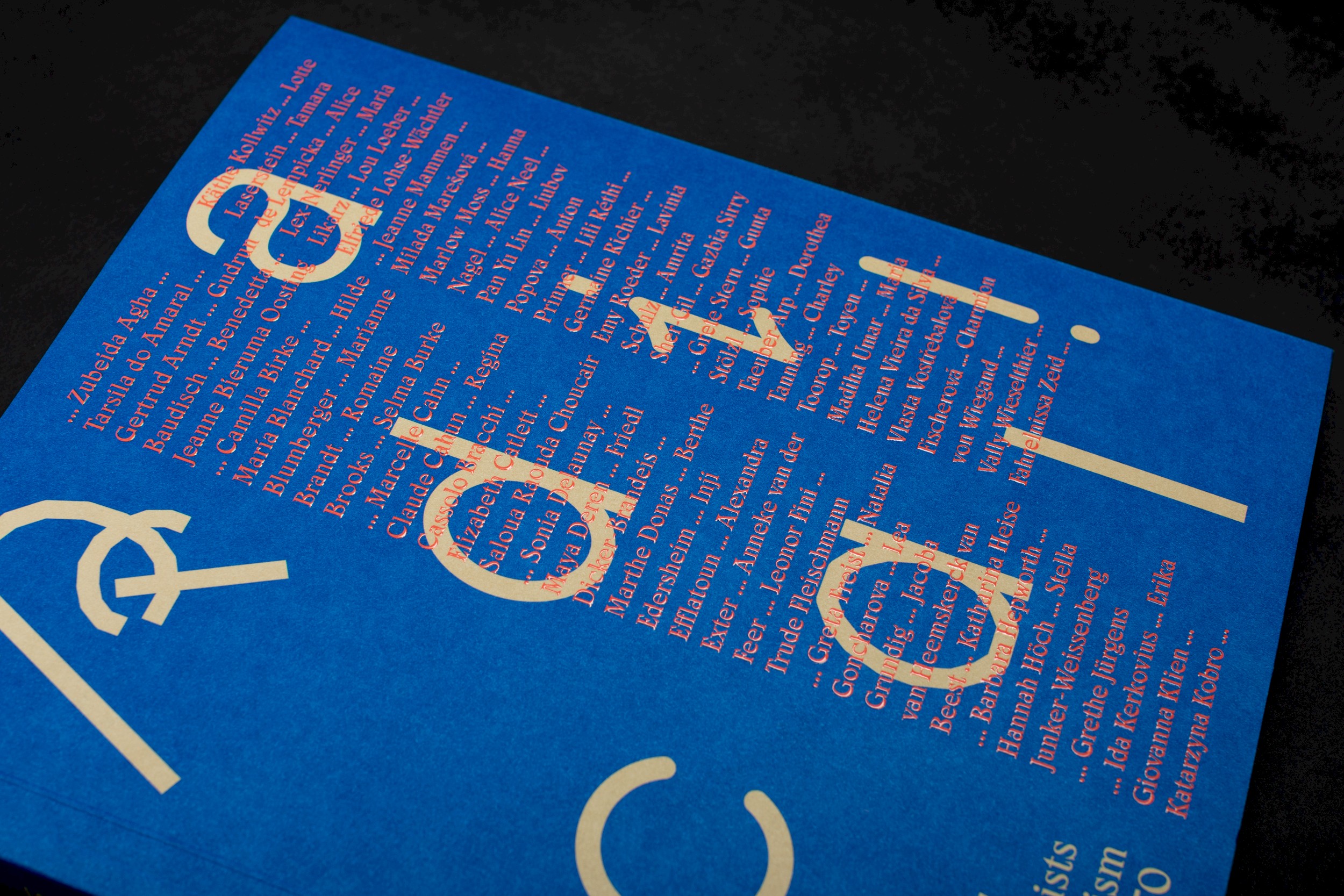
Radical! Women Artists and Modernism 1910–1950
- Editor(s): Stella Rollig, Stephanie Auer, Andrea Jahn, Kathrin Elvers-Svamberk, Saskia Bak & Evelien Scheltinga
- Publisher: Verlag der Buchhandlung Walther und Franz König
- Year: 2024
- Size: 22.4 × 27.2 cm
- Number of pages: 256
Designed in collaboration with Alexandra Möllner.
The exhibition catalogue aims to make the works of women artists and gender-diverse individuals of modernism more visible and to expand the art-historical canon.
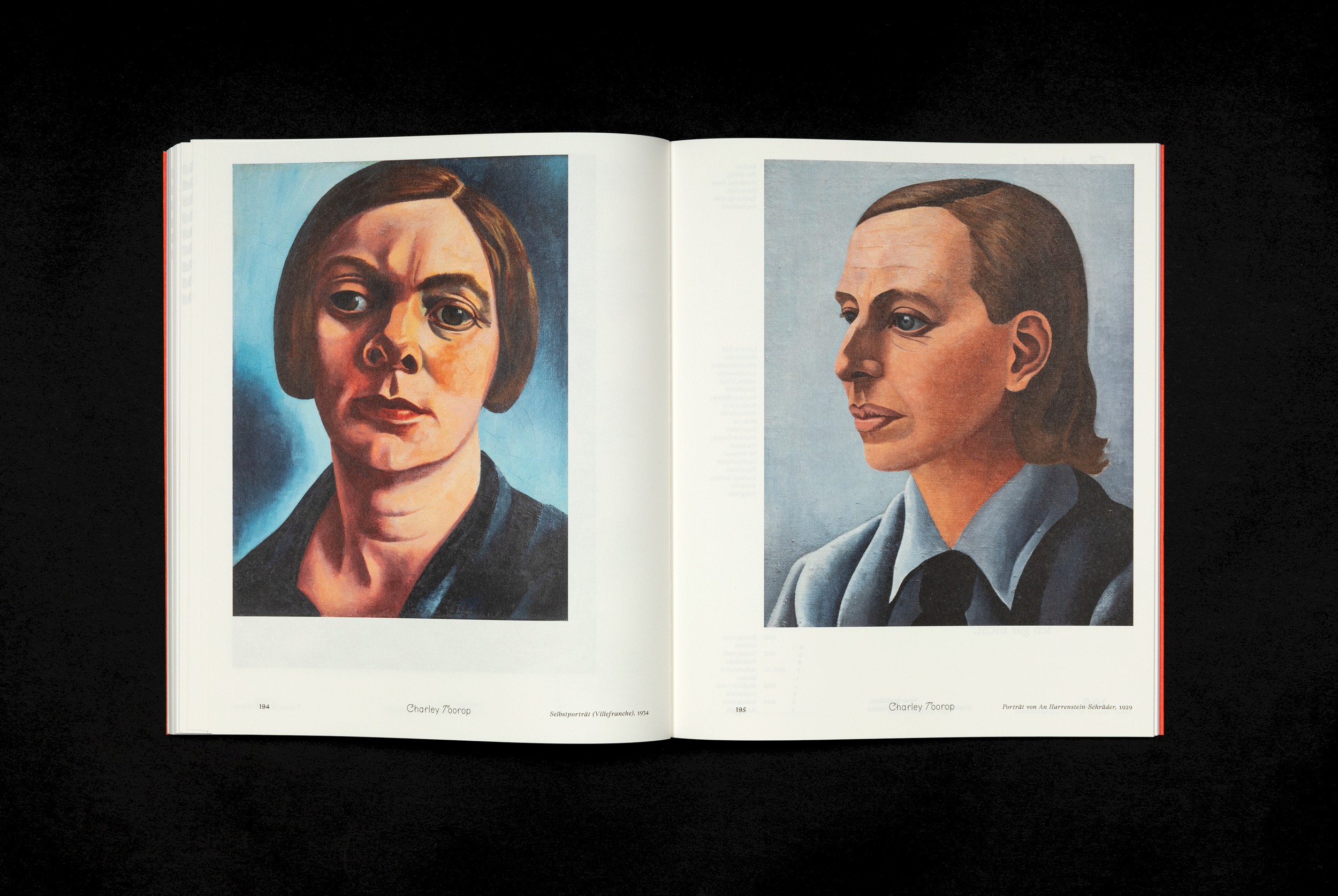
Seventy women* artists from 22 countries—RADICAL! challenges the notion of modern art as a linear development driven primarily by men. Instead, the exhibition brings together women artists from diverse backgrounds in dialogue, opening up new perspectives on the diversity and cross-border dimensions of modernism. What united the selected women* artists was their search for a new visual vocabulary to depict the nature and challenges of modern life and to respond to the pressing questions of their time. Their works became acts of resistance against patriarchy, capitalism, fascism, and colonialism. At the same time, through both their work and their ways of living, the women* artists questioned traditional role models, addressed the challenges of emancipation, and envisioned possible identities beyond dominant norms.
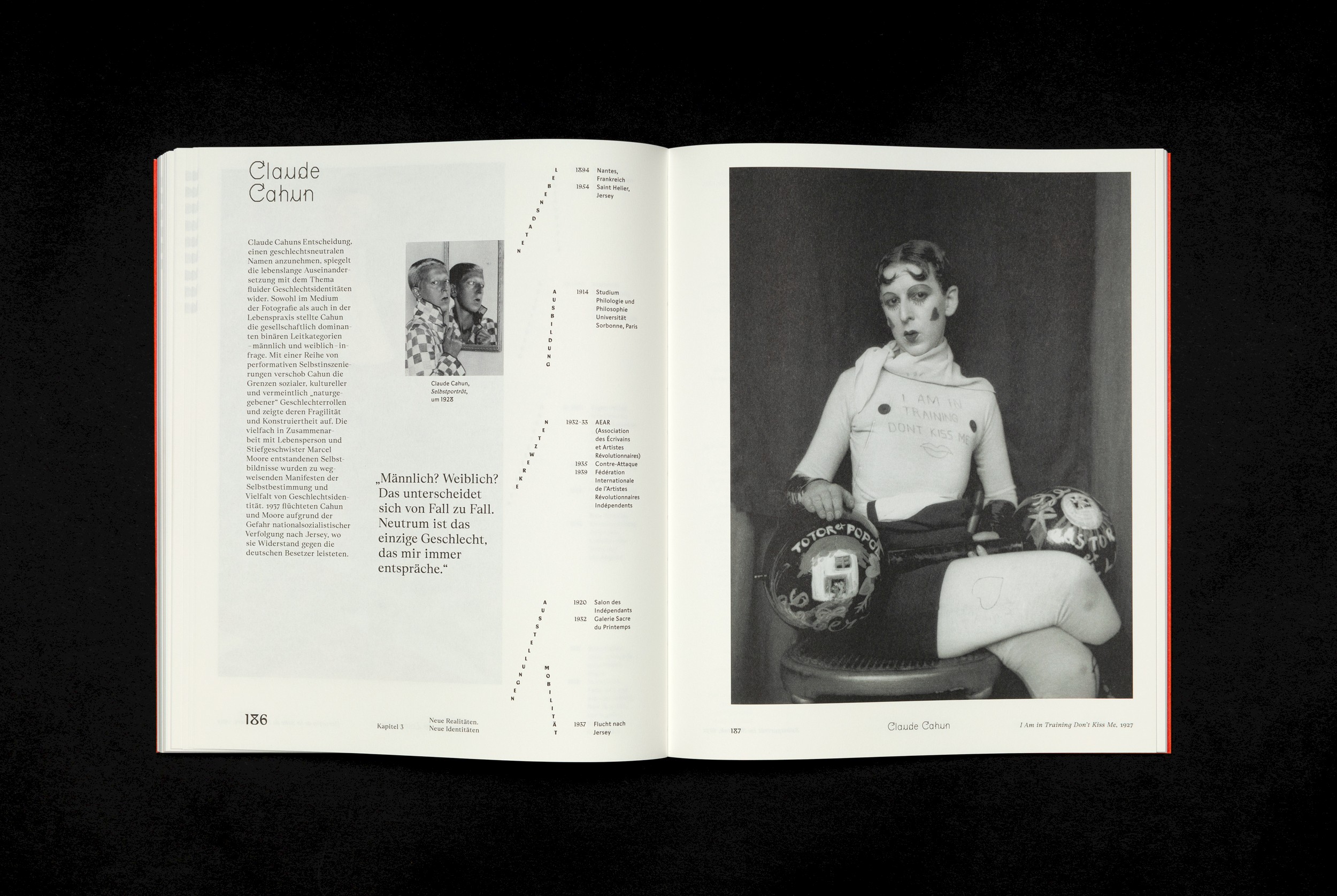
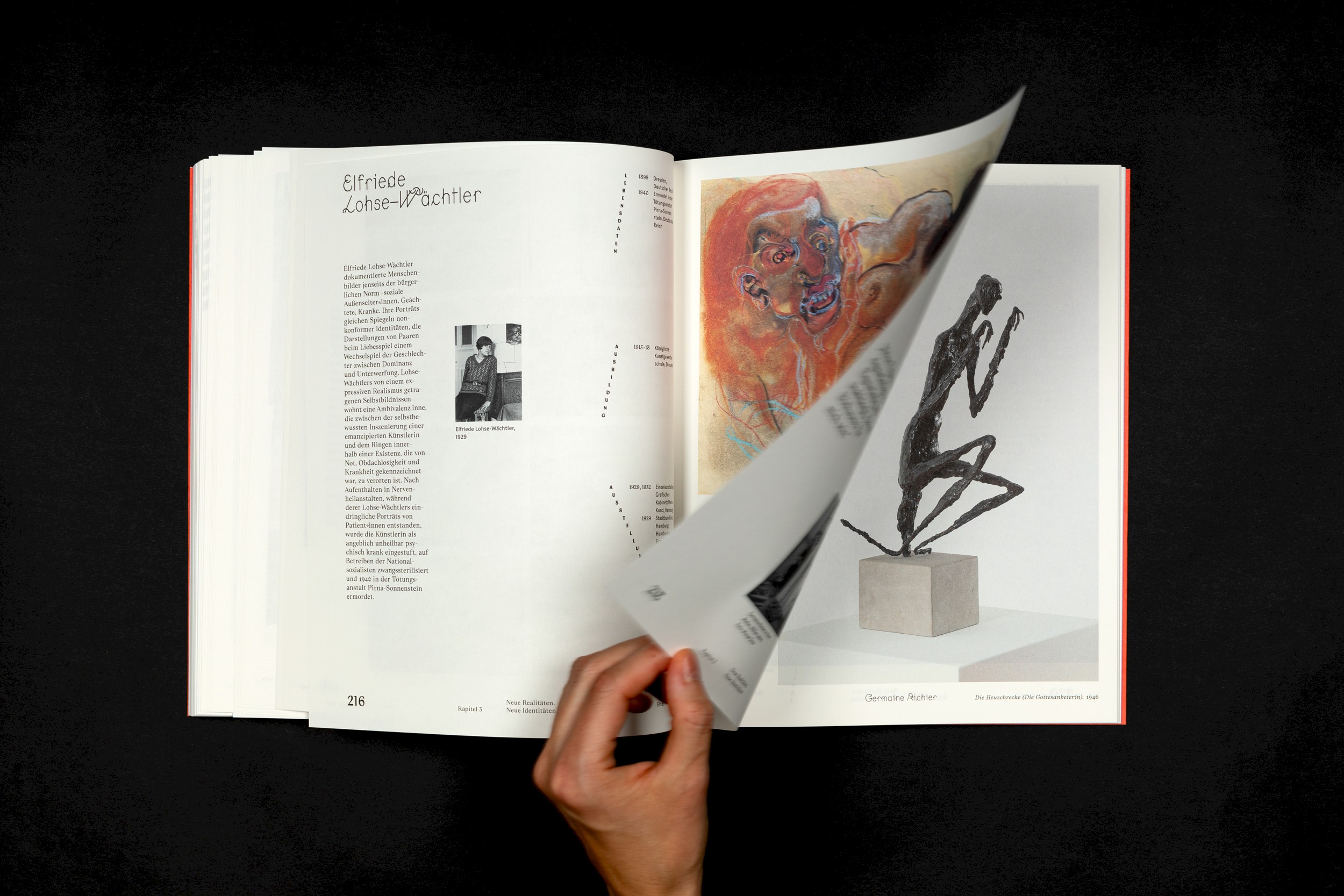
The design adopts an eclectic approach, combining different styles and typographic references to visually connect the heterogeneous works of the exhibition. The works range from abstract, constructivist formal languages to highly powerful, realistic visual idioms.
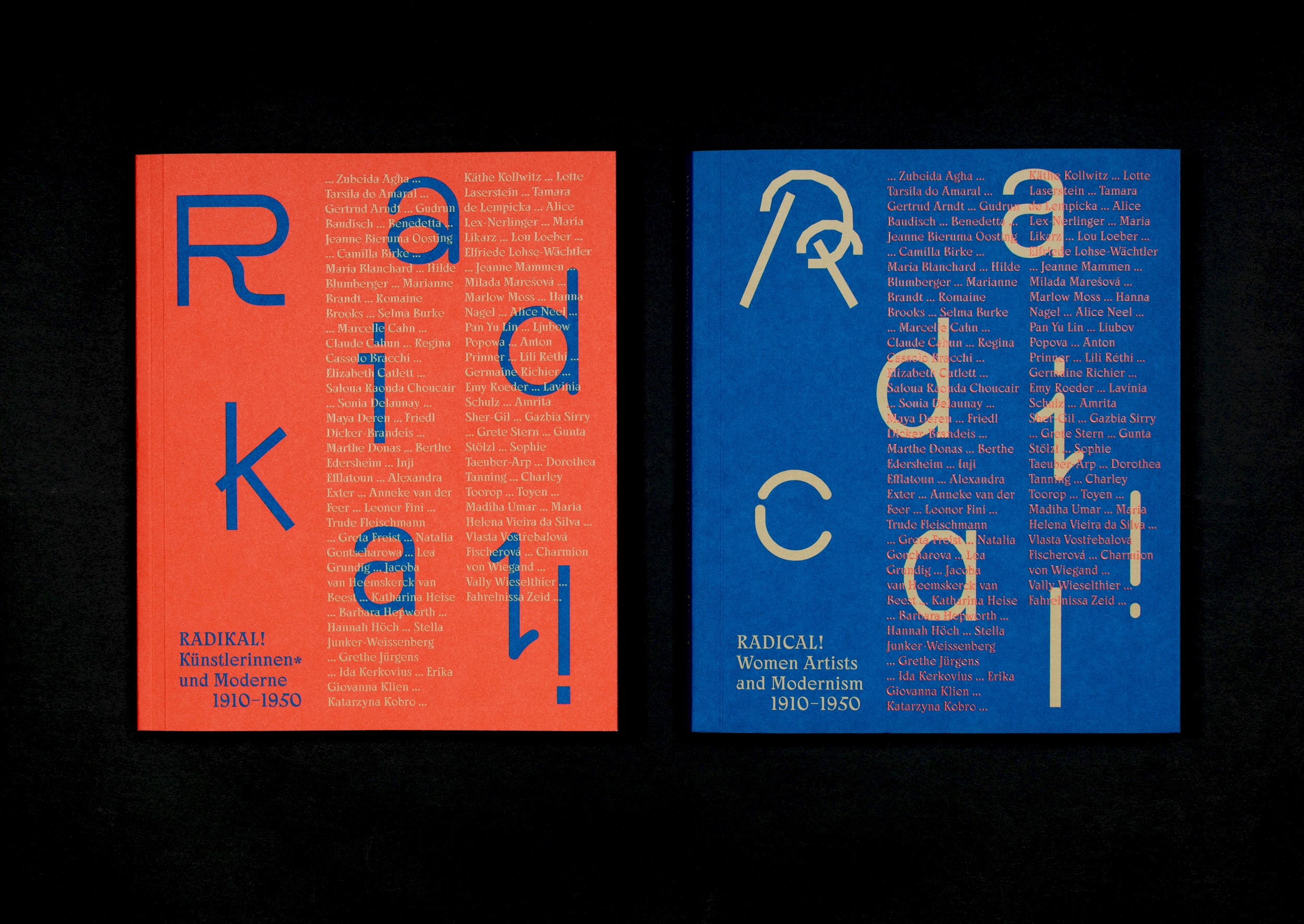
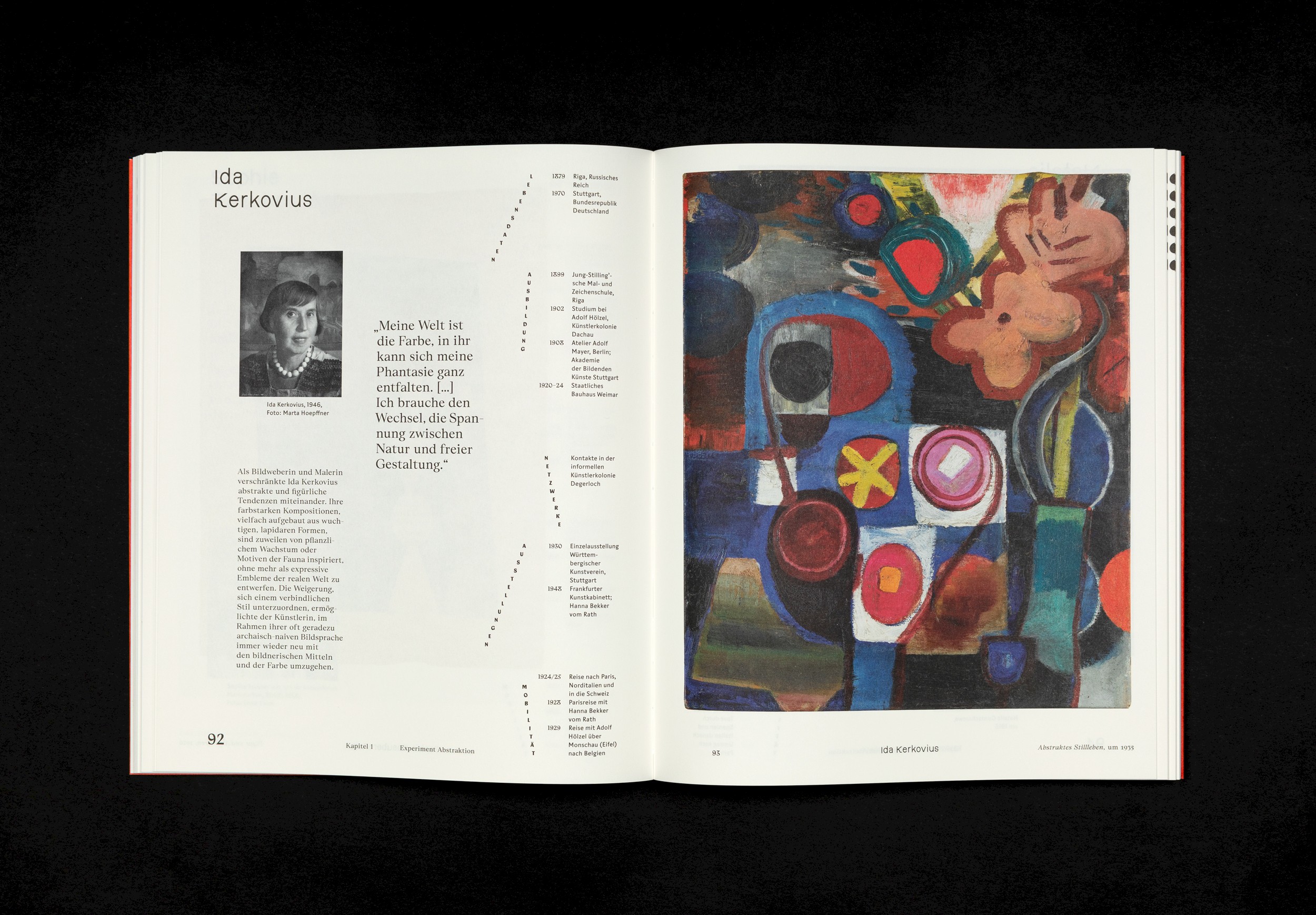
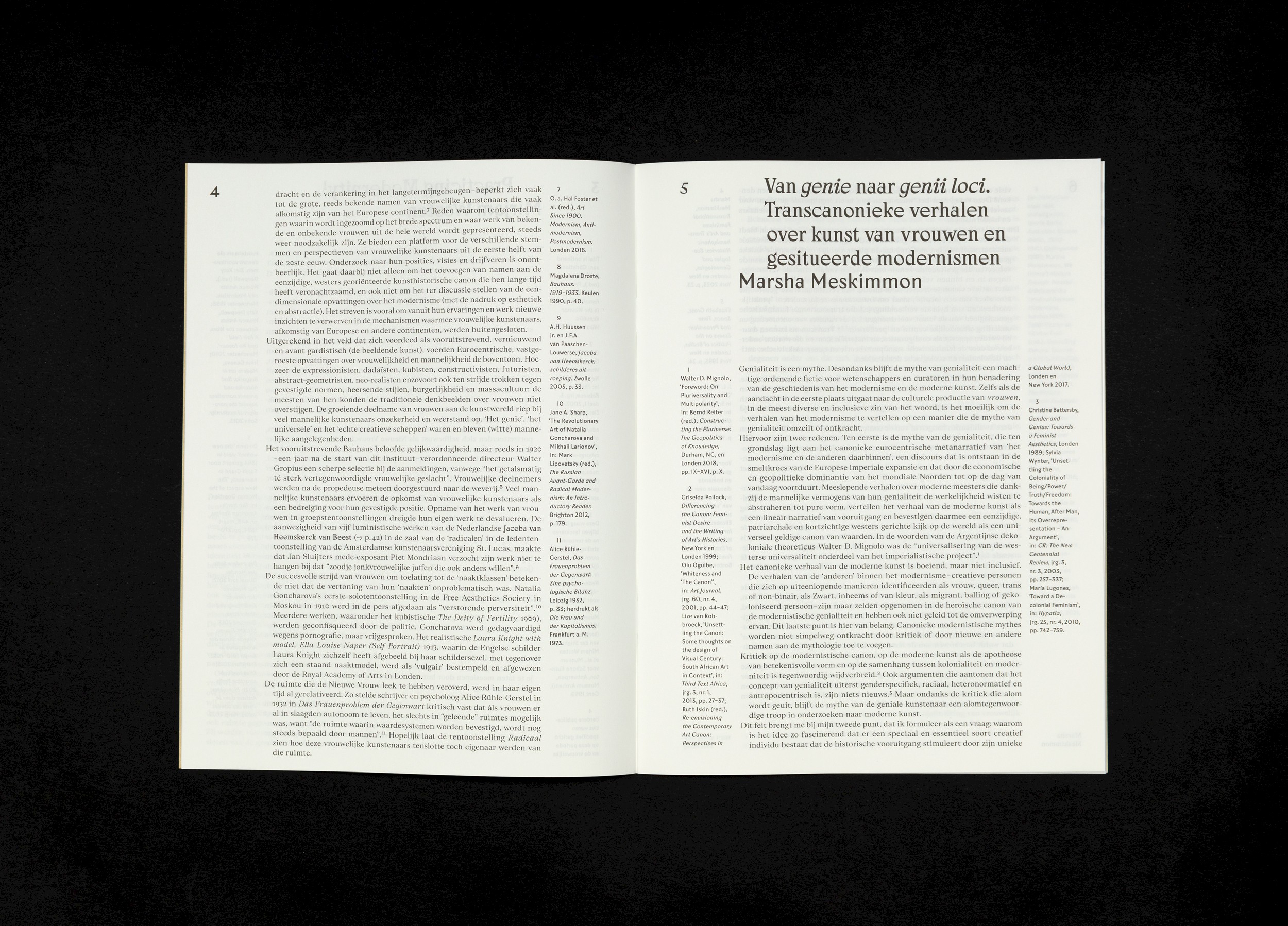
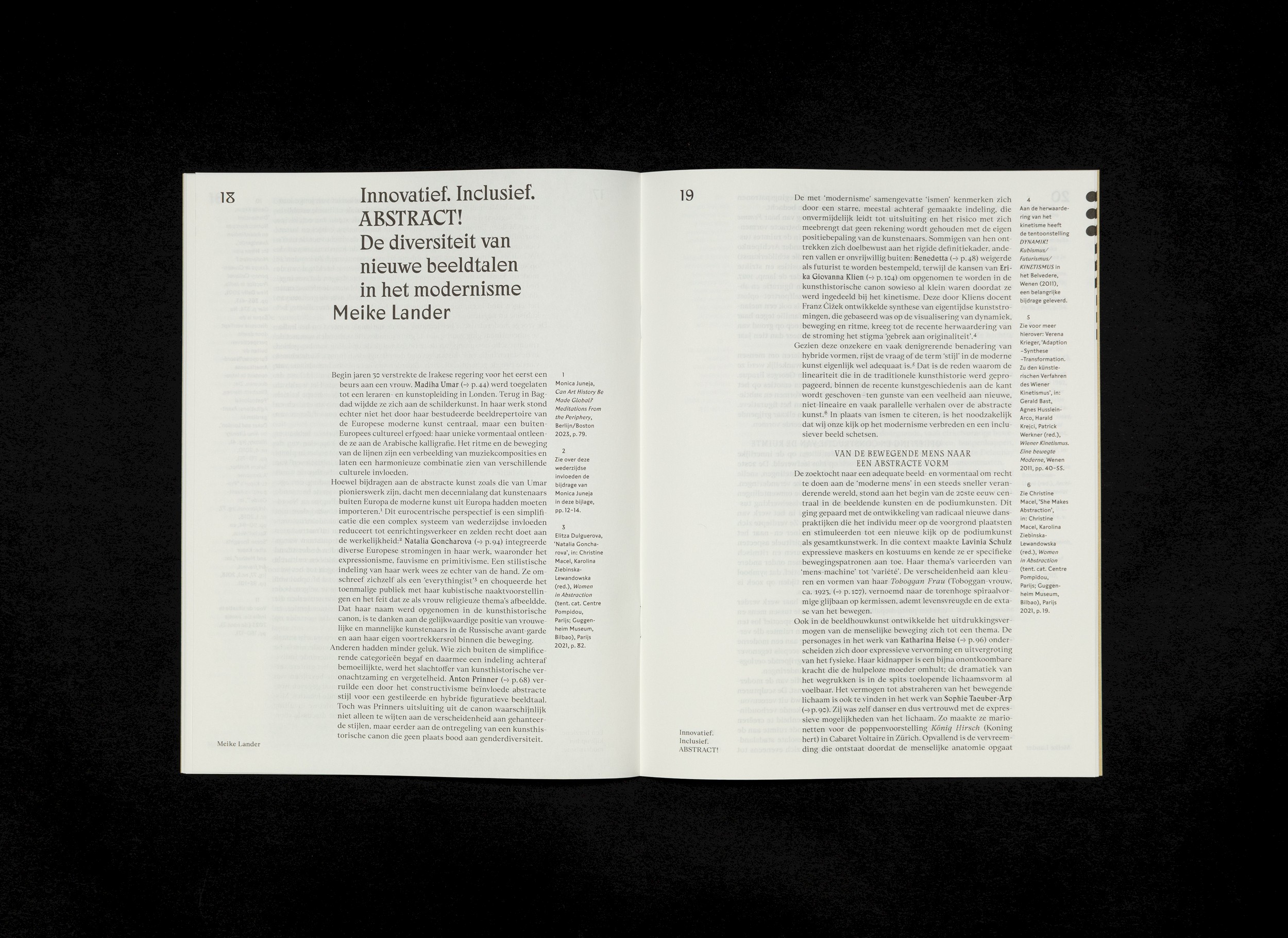
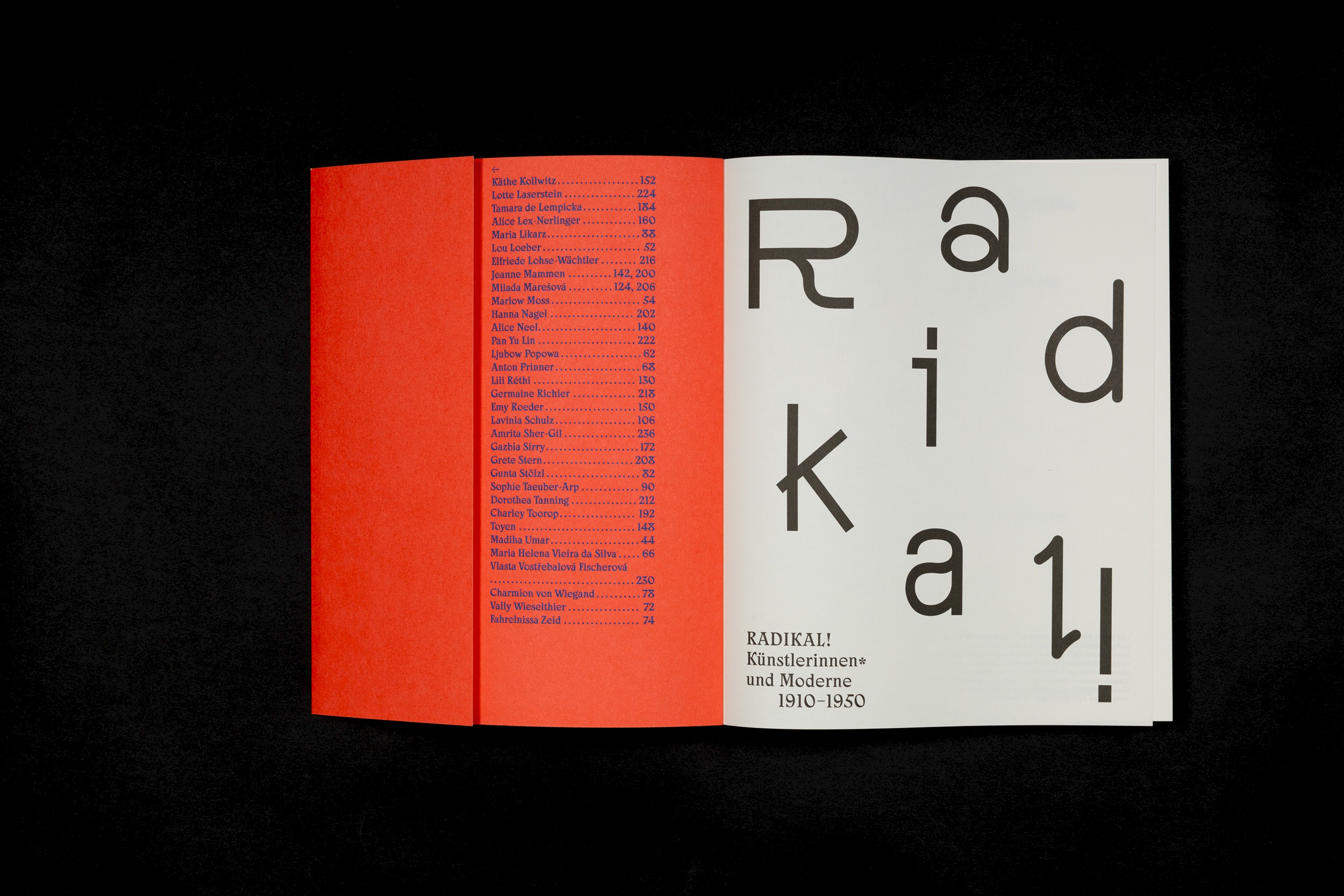
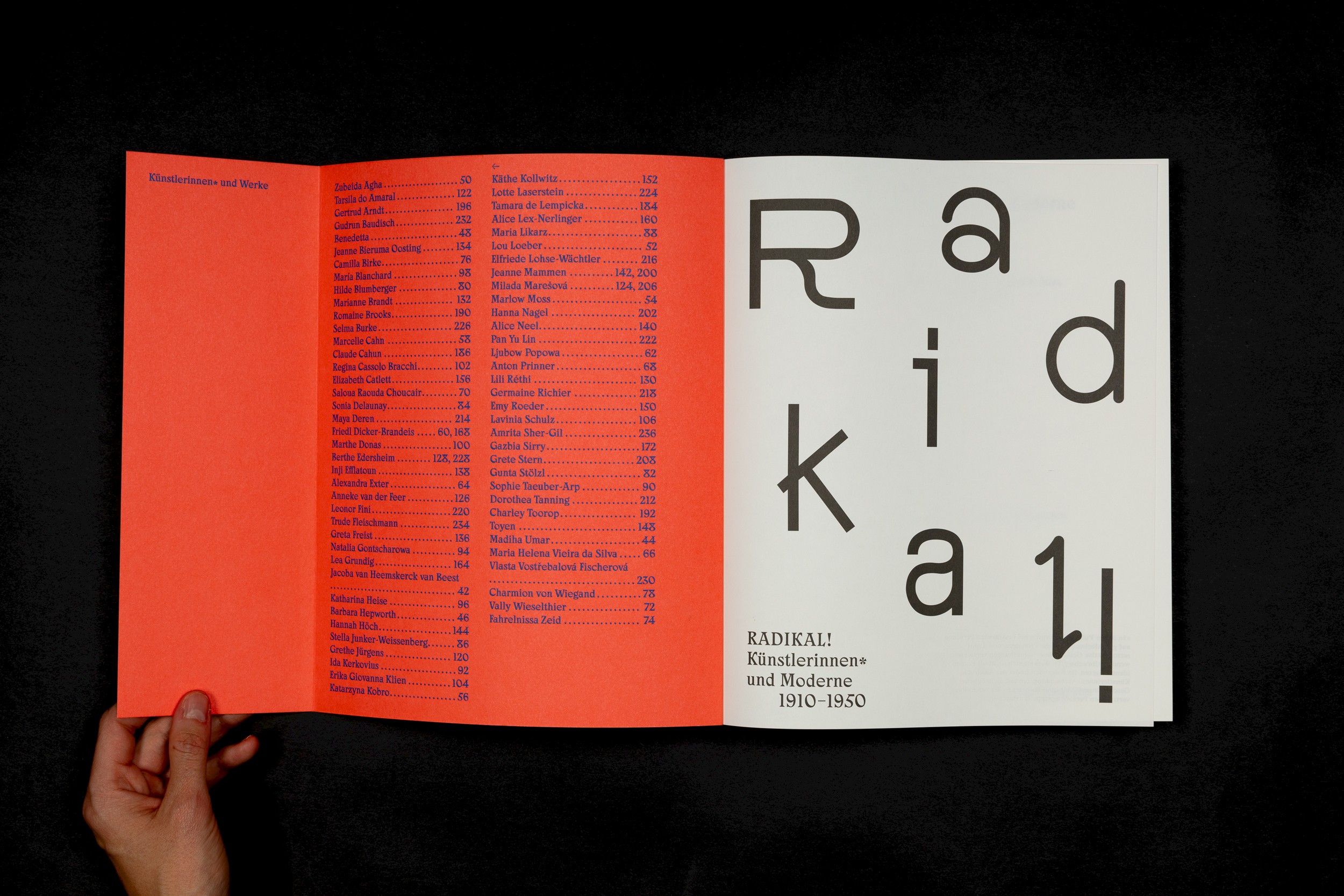
Central to the design concept was the visibility of the women* artists: their names are set in eccentric typefaces and are typographically highlighted within the body text.
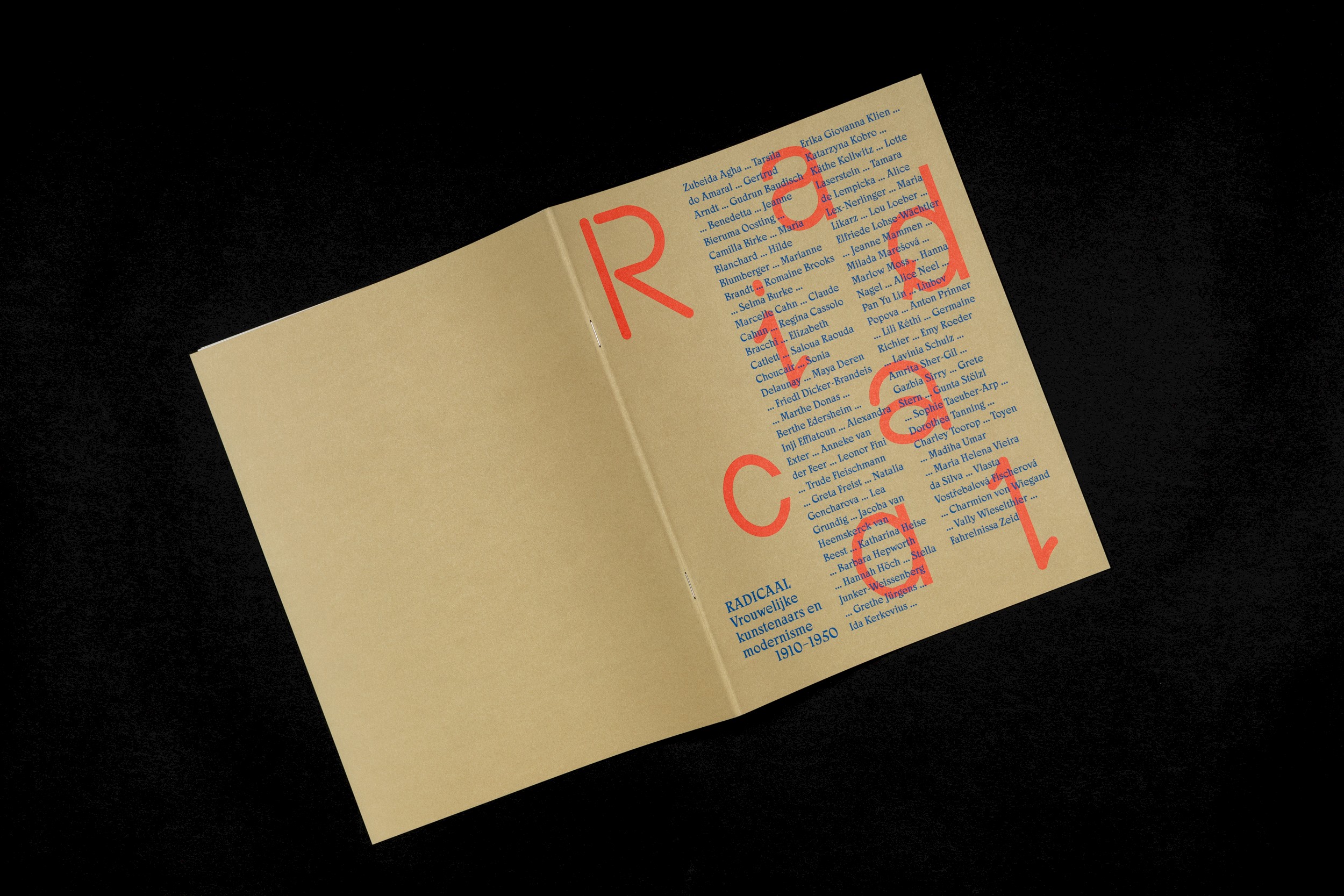
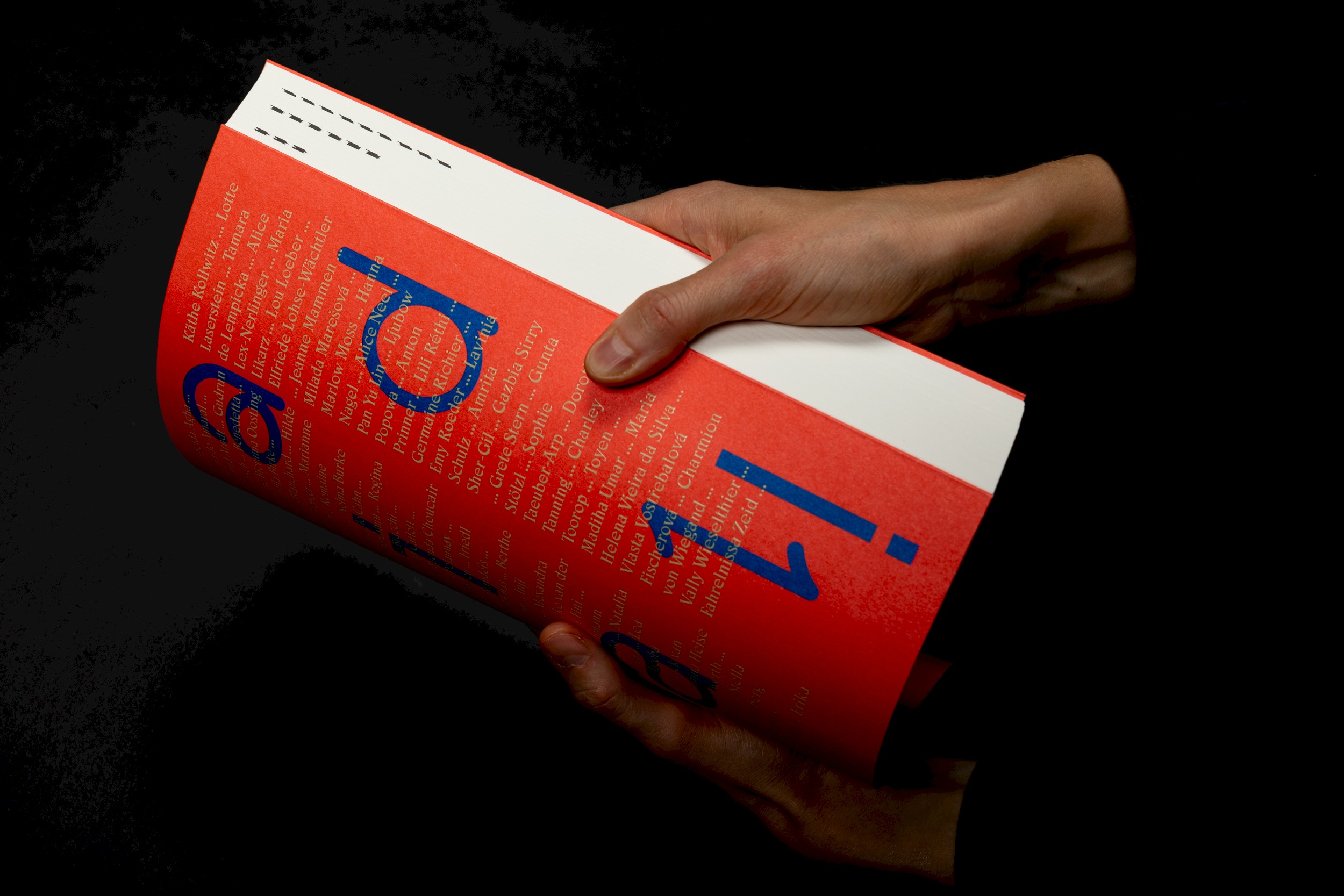
A key graphic element is the ellipsis “...”, which, as a mark of omission, points to incompleteness while simultaneously referencing the ongoing discovery of unknown women* artists. The glyph is used, among other places, on the cover to list the names of the women* artists and is also reflected in the structure of the book (the book edge). The chapter-opening pages are introduced with an increasing repetition of the ellipsis.
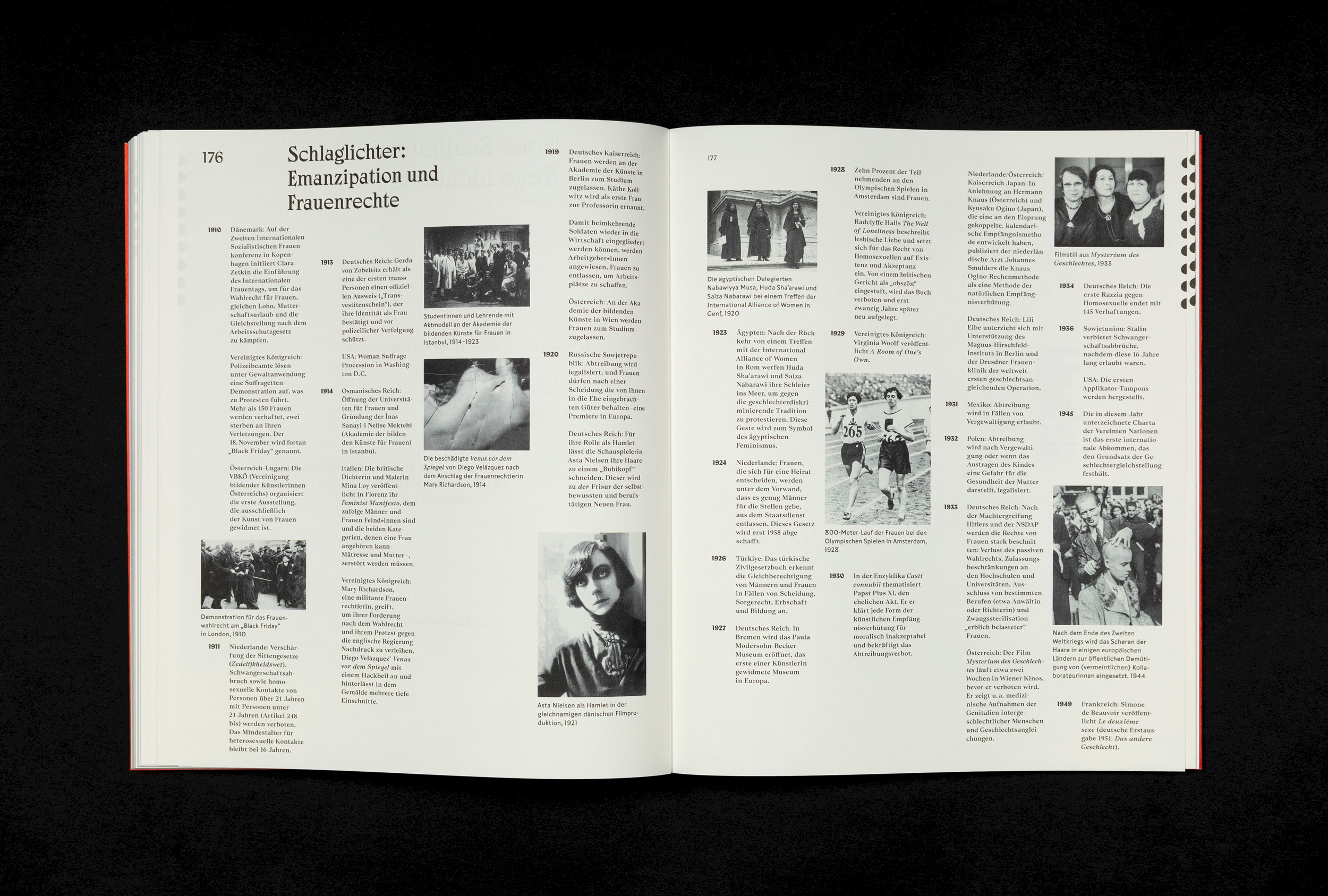
The catalogue pursues a non-linear presentation of art history that is global and multi-perspectival. The use of outdents instead of indents, diagonally set headings, and the chapter-by-chapter migration of text blocks from the right edge of the page toward the left is intended to suggest a break from the art-historical canon.
All typefaces used in the book were designed by FLINTA* designers.
Studio photography by Konrad Strutz